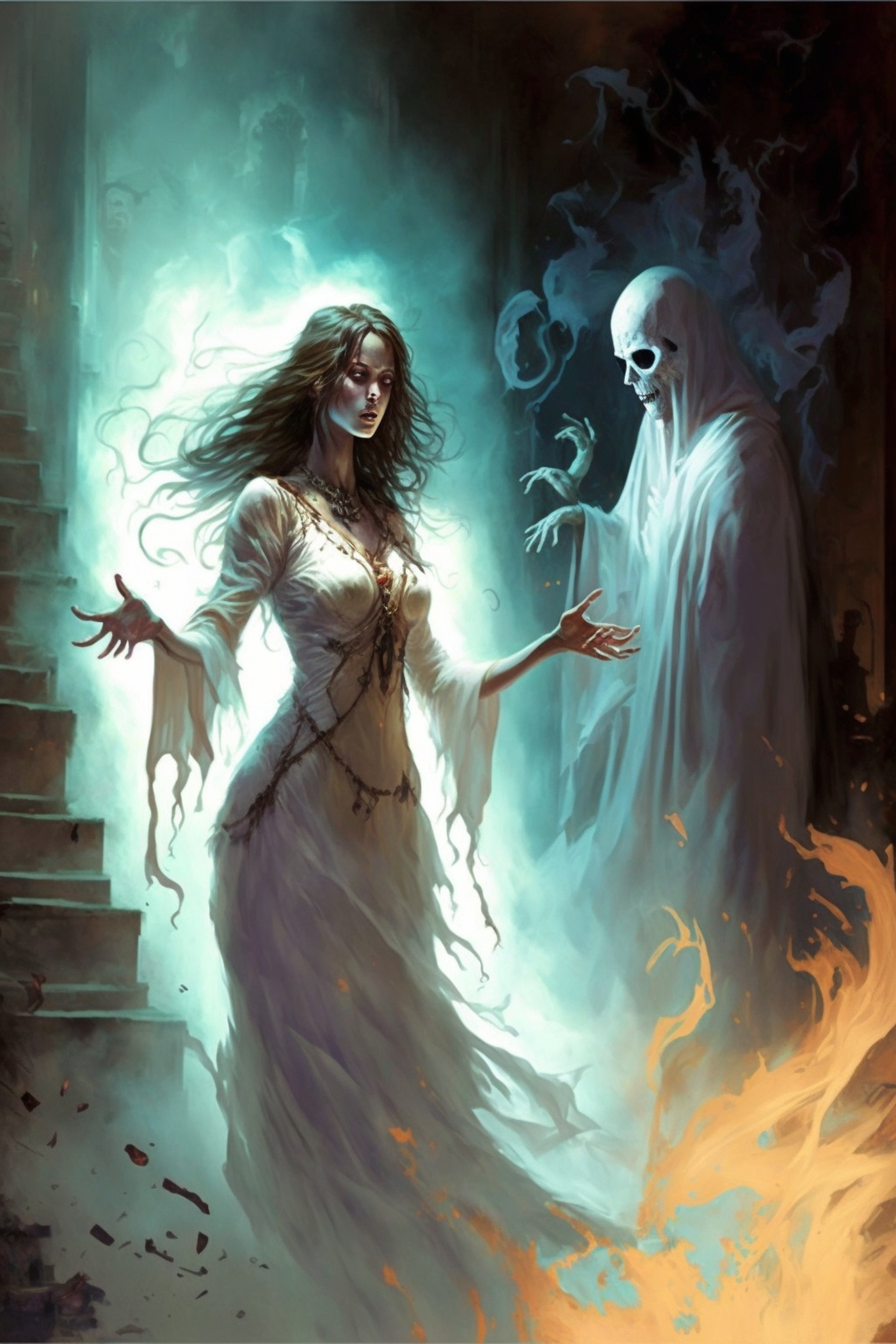
Die Geisterbeschwörung ist, anders als die Nekrologie, eine Art der Magie, die zwar nicht geachtet, aber zumindest respektiert wird. Geisterbeschwörer sind in der Lage, mit den Geistern von verschiedenen Wesen Tirakans zu kommunizieren und sie in die Welt zu rufen. Die Zauber werden meistens in Form von längeren Ritualen ausgeführt.
Die Geisterbeschwörung ist, anders als die Nekrologie, eine Art der Magie, die zwar nicht geachtet, aber zumindest respektiert wird. Geisterbeschwörer sind in der Lage, mit den Geistern von verschiedenen Wesen Tirakans zu kommunizieren und sie in die Welt zu rufen. Die Zauber werden meistens in Form von längeren Ritualen ausgeführt.
Ursprünge der Geisterbeschwörung
Die Ursprünge der Geisterbeschwörung liegen im viel älteren Schamanismus. Für den Schamanismus gilt alles als belebt und beseelt. Und diese Seelen verschwinden auch nicht wirklich nach dem Tode des jeweiligen Wesens oder der Zerstörung des jeweiligen beseelten Objektes. Auch anscheinend seelenlose Dinge welche vom Menschen geschaffen wurden können mit einer bewußten Seele ausgestattet werden wie es zum Beispiel sogar mit Schwertern, aber auch Amuletten und anderen Foki bereits gemacht wurde.
Formen der Geisterbeschwörung
1. Beschwören von menschlichen Seelen („Geistern“)
Dies ist wohl die bekannteste Form der Geisterbeschwörung. In den Ländern welche von der yadosischen Kultur beeinflusst waren oder sind gehören sogenannte „Seancen“ zum Zeitvertreib der oberen Klassen. Manche Geisterbeschwörer benutzen in ihren Ritualen verschiedene Werkzeuge. Einige benutzen Kristallkugeln, andere ein Brett auf dem verschiedene Buchstaben aufgebracht sind und welche mit einem Reif angezeigt werden. Bei dieser Methode buchstabiert also der Geist quasi. Allerdings geben einige Vertreter der Zunft unverwunden zu das es sich bei diesen Werkzeugen eher um Beiwerk handelt um die Kundschaft in eine mystischere Stimmung zu bringen.
2. Beschwören von animalischen Seelen („Tiergeistern“ oder „Totems“)
Eine der wohl ältesten Formen der Geisterbeschwörung die ebenfalls auf alte schamanistische Praktiken zurück geht. Der Beschwörer ist in der Lage tierische Seelen zu invozieren, das heißt, in sich hinein zu rufen. Dadurch kann er für kurze Zeit bestimmte Fähigkeiten dieser Tierart benutzen. Aber auch das Beschwören von Tiergeistern welche sich materialisieren können und dem Beschwörer zur Seite stehen ist möglich. Meist sind die Qualitäten der Wesenheiten jedoch dem Charakter des Beschwörers sehr ähnlich denn die Matrixen benötigen eine gewisse Kompatibilität. Deshalb übernehmen einige Geisterbeschwörer auch den Begriff des Totems den sie von ihren wilden Vettern, den Schamanen, geborgt haben.
3. Beschwören von unbelebten Seelen („Elementarseelen“)
Alles was in Verbindung zu den Elementen steht hat irgendwie eine Seele. Wie bereits oben erwähnt sind auch elementare Geister rufbar. Dieser Effekt ist durchaus mit einigen Techniken des Elementarismus vergleichbar, wenn auch bei weitem nicht so strukturiert und durchdacht. Dies ermöglicht aber auch das Angehen von nicht klassischen Elementen oder Mischelementen wie bei dem Zauber Geist des Weines zu erkennen ist.
4. Sonderformen der Beschwörung
Wenn ein Beschwörer wirklich gut ist kann er in Trancen jegliche Seele und Kraft rufen. Was dann allerdings passiert entzieht sich oft der magietheoretischen akademischen Betrachtungsweise.
Zauber
Geisterbeschwörungen - Blut
Todesvision
Das Opfer wird von einer sehr realistischen Vision seines Todes gequält, die Art des Todes kann der Zaubernde bestimmen. Die Vision umfasst das Sterben, das Verfaulen des Fleisches und den Zerfall der Knochen zu Staub. Das Opfer nimmt keinerlei körperlichen Schaden durch den Zauber, allerdings besteht die Möglichkeit, dass es durch die Todesvision traumatisiert wird. Während der Dauer des Zaubers ist das Opfer kaum zu einer sinnvollen Handlung fähig.
Das Opfer kann mit einer Willenskraftprobe versuchen, den Zauber abzubrechen. Hierbei sind so viele Erfolge notwendig wie der Zauber Stärke hat.
Der Zauber dauert an bis die Willenskraftprobe gelungen ist.
Auffassungsgabe201
Speziell
Runden
9
Geisterbeschwörungen - Natur
Tiergeist rufen
Der Zaubernde zeichnet ein Pentagram in den Boden und konzentriert sich auf den Tiergeist.
In dem Moment in dem das Ritual beendet ist erscheint an der Stelle des Pentagrams der Tiergeist. Der Tiergeist führt Stärke einfache Dienste für seinen Meister aus. Die Dienste müssen einfach sein und nur eine Handlung beinhalten. z.B. einen Ritt, der beginnt mit Aufsitzen und endet mit Absteigen, oder Hilfe im Kampf gegen einen Gegner. Die Werte des Tiergeistes entsprechen denen des normalen Tieres, erhöht um Magieniveau Punkte.
Charme201
Sofort
7Ritual
Geisterbeschwörungen - Blut
Stimme der Toten
Der Zaubernde legt einen Gegenstand des Toten vor sich, schliesst die Augen und konzentriert sich auf den Gegenstand und das Reich der Toten.
Der Zaubernde verfällt in eine leichte Trance, seine Stimme verändert sich und ähnelt der des Toten, je mehr desto persönlicher Gegenstand ist und je mehr der Zaubernde über den Toten weiß. Der Zaubernde kann Stärke+Magieniveau Fragen an den Toten stellen, die mit Ja/Nein zu beantwortet wird. Der Tote die muss Antwort auch vor seinem Tod hätte geben können.
Auffassungsgabe201
Sofort
7
Geisterbeschwörungen - Blut
Schutz der Geister
Der Zaubernde beschwört den Schutz der Geister herauf. Der Schutz von Stärke Personen erhöht sich für Magieniveau Kampfrunden um 3 Normalen Schutz, der Wert Resistenz um 3.
Logik201
Magieniveau
Runden
5
Geisterbeschwörungen - Blut
Rat der Geister
Der Zaubernde kann Stärke Fragen an die Geisterwelt richten, die ihm, wenn die Geister ihm wohlgesonnen sind, beantwortet wird. Die Fragen müssen eine einfache ja/nein Antwort ermöglichen.
_Magieniveau Geister erscheinen, um mögliche Fragen zu beantworten.
Auffassungsgabe101
Sofort
5
Geisterbeschwörungen - Geist
Lebende Rüstung
Der Zaubernde erschafft Stärke lebende Rüstungen. Die Rüstungen können einfache Verteidigungs- und Angriffsaufträge ausführen. Sie haben 4 mögliche Wunden und führen Schwerter mit einem Durchschlag von 0 und 3+Magieniveau Würfeln.
Charme201
Stärke
Runden
9
Geisterbeschwörungen - Geist
Körper beseelen
In dem Moment in dem das Ritual beendet ist, bindet der Zaubernde einen einfachen Geist in einen toten Körper, der den Körper steuert und einfache Befehle durchführt. Die Bewegungen sind langsam, und da ihm nur normale Bewegungen zur Verfügung stehen, sollte der Körper vorher besonnen aussucht werden. Eine Puppe oder Leiche kann laufen, eine Kugel kann rollen aber zum Beispiel keine Treppen steigen.
Der Zaubernde kann die direkte Kontrolle über den Körper übernehmen, als würde er in diesem stecken. Allerdings kostet dies 1 Arkana pro Stärke*5 Minuten, und sämtlicher Schachen, den der Körper erleidet, erleidet auch der Körper des Zaubernden.
Der Zauber endet nach Magieniveau Stunden.
Charme3015
Magieniveau
Stunden
7Ritual
Geisterbeschwörungen - Blut
Grabeskälte
In dem Moment in dem der Zaubernde sein Ziel berührt, breitet sich von der Stelle der Berührung eine furchtbare Kälte aus, die Magieniveau Wunden pro Kampfrunde verursacht. Der Zaubernde kann den Zauber jederzeit abbrechen, wird er nicht abgebrochen, endet er wenn das Ziel vollständig ausgekühlt und tot ist.
Das Opfer wirft zu Beginn jeder Kampfrunde vor dem Schaden einen Wurf auf Resistenz. Gelingt der Wurf mit mindestens Stärke Erfolgen, so ist der Zauber beendet und es entsteht kein Schaden mehr.
Kraft201
Sofort
9
Geisterbeschwörungen - Geist
Geist austreiben
Der Zaubernde wählt bis zu Stärke Geister oder von Geistern beherrschte Wesen. Die Geister werden verbannt und verlassen ihr irdisches Dasein.
Logik301
Sofort
5
Geisterbeschwörungen - Geist
Gegenstand beseelen
In dem Moment in dem das Ritual beendet ist, bindet der Zaubernde einen einfachen Geist in den gewählten Gegenstand, der eine einfache Aktion an dem Gegenstand durchführt.
Im Gegensatz zu dem Ritual Beseelte Waffe ist der Grundgedanke dieses Rituals eher friedlich, so dass die verbreitesten Einsatzbereiche diesen Rituals dazu dienen um in Kristallkugeln leuchtenden Nebel wirbeln zu lassen, oder Kerzenleuchter die Kerzen entzünden zu lassen, sobald der Raum betreten wird.
Bei dem Ritual muss der Zaubernde festlegen, wer und wie der Auslöser ist. Für manche Sachen, wie die genannten Kristallkugeln, macht es Sinn, wenn dies nur eine bestimmte Berührung des Nutzers ist, bei dem angesprochenem Kerzenleuchter eher jeder, der in eine bestimmte Reicheite um den Kerzenleuchter kommt.
Der Gegenstand bleibt bis zu Stärke+Magieniveau Stunden beseelt.
Charme5015
Stärke+Magieniveau
Stunden
5Ritual
Geisterbeschwörungen - Natur
Einfacher Dienstgeist
Der Zaubernde reibt seine Hand mit Knochenstaub ein, zeichnet ein Pentagram in die Luft und konzentriert sich auf den Geist.
In dem Moment in dem das Ritual beendet ist erscheint an der Stelle des Pentagrams der Dienstgeist. Der Dienstgeist führt einen einfachen Dienst für seinen Meister aus, der Dienst kann aus max. Stärke Dingen bestehen. Der Dienstgeist ist nicht in der Lage einem Lebewesen oder Gegenstand direkt Schaden zuzufügen. Beispiele für Dienste sind das Überbringen von sehr kurzen Nachrichten (max. Stärke Worte an eine Person, oder 1 Wort an insgesamt Stärke Personen), die Benachrichtigung des Zaubernden wenn eins von Stärke bestimmten Ereignissen eintritt oder gar das Sammeln von Stärke Äpfeln.
Magieniveau 4+: Der Geist kann auch Personen schaden zufügen.
Charme1015
Sofort
7Ritual
Geisterbeschwörungen - Geist
Besessenheit
Der Zaubernde zeichnet dem Ziel ein Pentagram auf die Stirn und konzentriert sich auf den Geist und das Ziel.
Bei diesem Ritual lässt der Zaubernde einen Geist in den Körper des Ziels fahren. Der Geist kann ein Dienstgeist, ein freier Geist oder der Geist des Zaubernden sein. Ihm letzten Fall sackt der Körper des Zaubernden zusammen, reagiert nicht, atmet langsam und starrt in die Leere, wenn seine Augen geöffnet werden. Das Ziel befindet sich (Stärke+Magieniveau)*10 Minuten unter der Kontrolle des in es gefahrenen Geistes, der den gesamten Körper steuern kann (laufen, schlagen, kämpfen, sprechen, usw.).
Sollte der Körper des Ziels sterben während der Bessesenheit, so verschwindet der Geist schlagartig aus dem Körper und fährt in seine Sphäre zurück. Sollte der Körper des Ziels sterben während der Zaubernde in ihm weilt, so kehrt der Geist des Zaubernden in seinen ursprünglichen Körper zurück, und der Zaubernde ist für 3W6 Minuten bewusstlos.
Der Zaubernde formt einen Beschwörungskreis um die zu beseelende Waffe.
In dem Moment in dem das Ritual beendet ist, bindet der Zaubernde einen Geist an die beseelte Waffe. Dieser Geist fügt dem Opfer, neben den waffenüblichen Wunden, zusätzlich Stärke Wunden zu. Die Waffe gilt als magische Waffe, kann jedoch nur von dem Zaubernden verwendet werden. Jeder andere der versucht die Waffe zu bedienen, wird selbst von dem Geist attackiert. Das Erscheinungsbild des Geistes kann vom Zaubernden frei bestimmt werden.
Mit der Waffe kann Magieniveau*5 mal angegriffen werden, bevor der Geist die Waffe verlässt.
Charme5015
Magieniveau*5
Aktionen
15Ritual
Geisterbeschwörungen - Geist
Geistkörper
Der Zaubernde schließt die Augen, denkt den Vers "Mein Körper, ein Geist" und öffnet die Augen danach wieder.
Der Zaubernde ist in der Lage, sämtliche Aktionen eines Geistes durchzuführen, z.B. sehen, Dinge berühren, zaubern sofern es keine Zutaten benötigt oder diese in seiner Reichweite liegen, fliegen, sich durch unbelebte Gegenstände bewegen usw.
Der Zauber kann jederzeit fallengelassen werden, wodurch der Zaubernde seine normale körperliche Gestalt annimmt, allerdings ohne Kleidung, da diese nicht mit verwandelt wird. Dem Zaubernden stark vertraute Gegenstände sollen wohl auch in Geisterform mitgeführt werden. Da Geister gegen nichtmagische Waffen und Attacken immun sind, ist dies auch der Zaubernde.
Der Zaubernde kann in Geistgestalt auch gebannt werden. Wenn er ausgetrieben wird, landet der Zaubernde in seinem Körper, bewusstlos für 2W6 Minuten in seinem Körper, an der Stelle wo er den Zauber begonnen hat.
Der Zauber hält für Stärke+Magieniveau Minuten an.