Weapons

Weapons and their properties
Sword cane
Blades

Sword cane

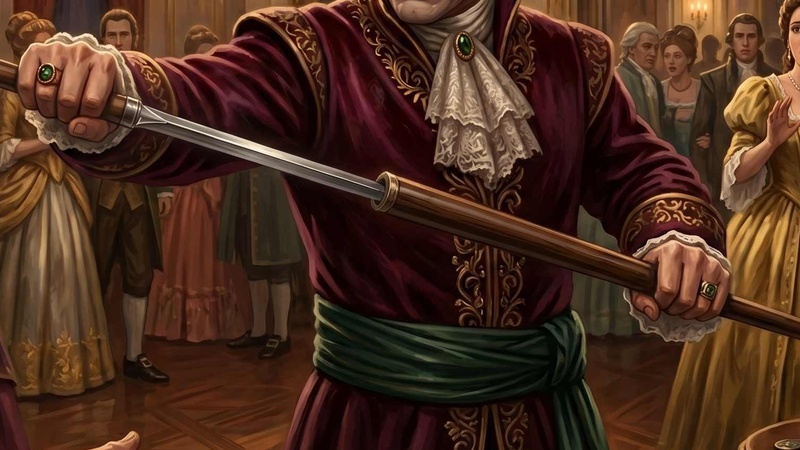
This object appears to be a fashionable or simple walking stick, typically made of polished wood with a metal-capped tip and an ornamental handle. The handle, often a metal knob or L-shaped grip, detaches from the main shaft. This shaft is hollow, serving as a scabbard for a slender, rigid, and needle-pointed thrusting blade concealed inside.

2 160
Piercing 1 (The target's protection is reduced by 1 before the wounds are determined.)
Damage Potential 1 (Add 1 dice to the hit roll)
Poison Dagger
Blades

Poison Dagger

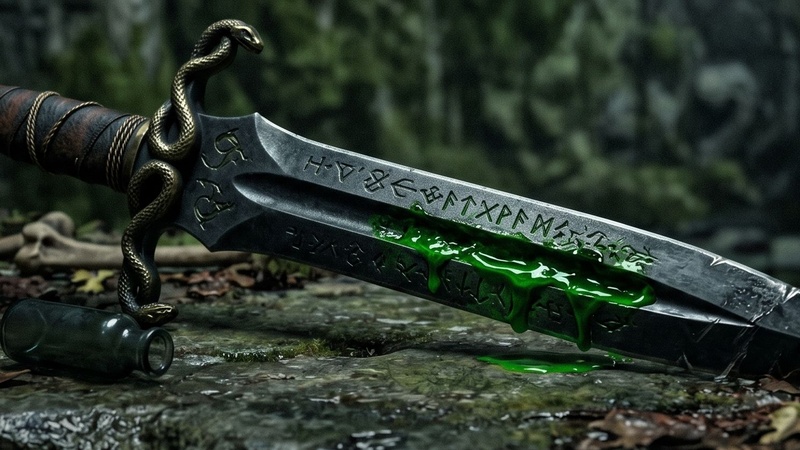
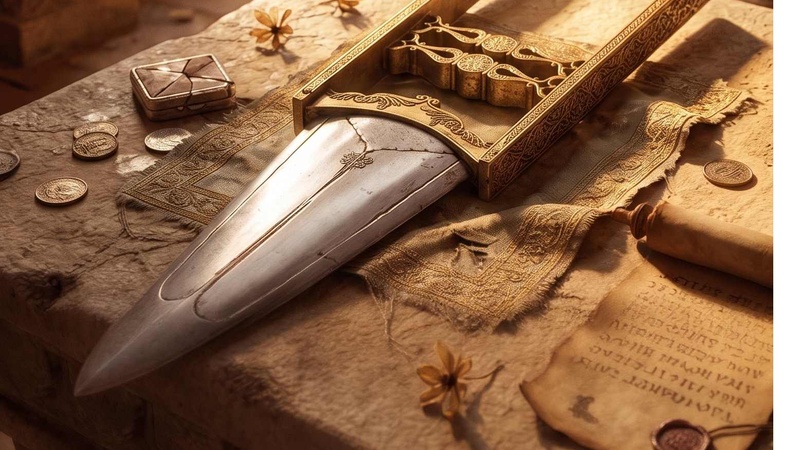
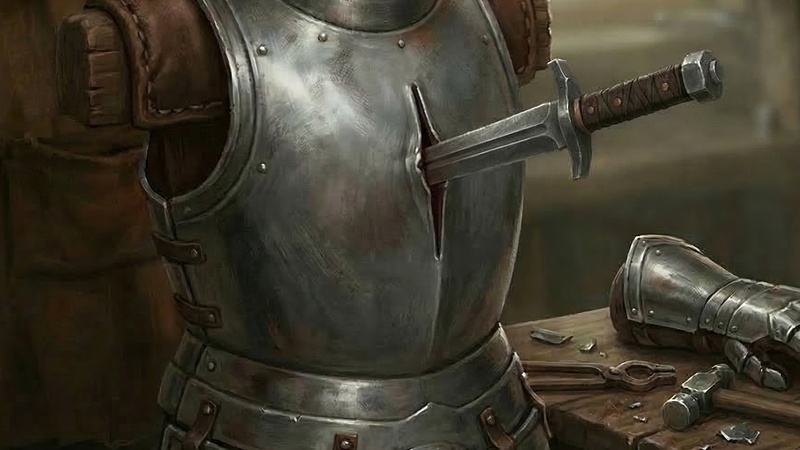
This dagger features a rigid, narrow blade that tapers to a reinforced, armor-piercing point. A distinct groove is cut into the steel, designed for the application of poison. The weapon is known to be particularly good at penetrating armor and poisons targets with the strength of the applied toxin.

0.80 1400
Piercing 2 (The target's protection is reduced by 2 before the wounds are determined.)
Concealment 2 (Describes how easy the weapon is to conceal)
Preparation 0 (The weapon requires 0 actions to ready it)
Poison Notch 1 (A notch for applying poison. Poisons with the strength of the poison used.)
Short Sword
Blades

Short Sword

A straight, double-edged blade, visibly shorter than a Long Sword but significantly longer than a dagger, forms this weapon. It is fitted with a simple, one-handed hilt, a functional crossguard, and a basic pommel. The weapon is lightweight and balanced, clearly serving as a practical military sidearm.

0.70 1000
Piercing 1 (The target's protection is reduced by 1 before the wounds are determined.)
Concealment 2 (Describes how easy the weapon is to conceal)
Damage Potential 1 (Add 1 dice to the hit roll)
One and a half-handed sword
Blades

One and a half-handed sword

This straight, double-edged blade is noticeably longer than a standard arming sword, yet shorter than a true two-hander. Its defining feature is the extended hilt, which is long enough to accommodate a second hand for increased power, though it remains balanced for one-handed use.

1.20 850
Piercing 1 (The target's protection is reduced by 1 before the wounds are determined.)
Concealment 3 (Describes how easy the weapon is to conceal)
Damage Potential 2 (Add 2 dice to the hit roll)
Foil
Blades

Foil

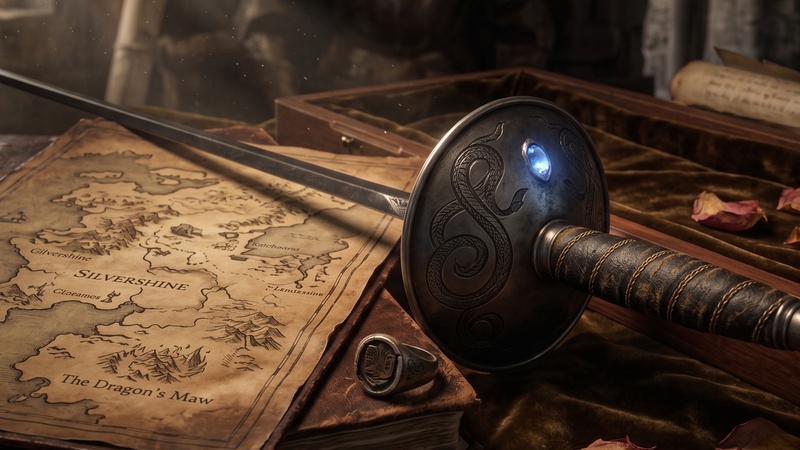
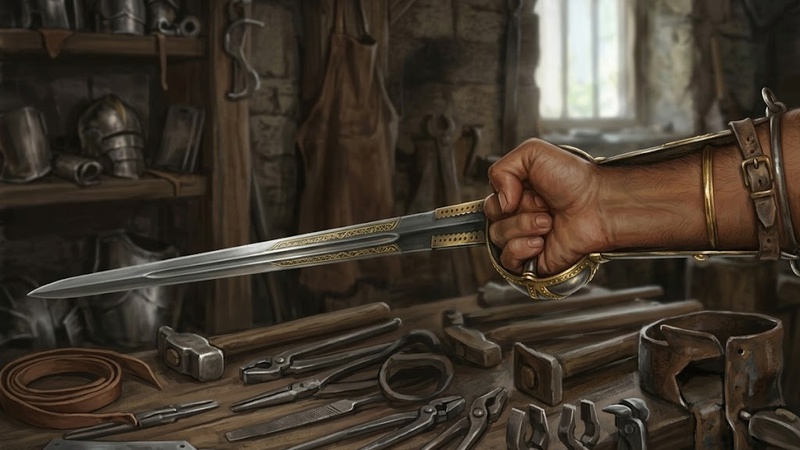
An exceptionally thin and flexible blade, often quadrangular in cross-section, defines this lightweight weapon. It possesses no sharpened edges, culminating instead in a fine, narrow point. The hilt is protected by a prominent, cup-shaped metal bell guard.

1.30 180
Piercing 1 (The target's protection is reduced by 1 before the wounds are determined.)
Concealment 5 (Describes how easy the weapon is to conceal)
Damage Potential 2 (Add 2 dice to the hit roll)
Two-handed Sword
Blades

Two-handed Sword

An enormous, straight, double-edged blade, far longer than a standard arming sword, dominates this weapon. Its defining feature is the massive, two-handed hilt, which uses an extended grip and a heavy pommel for balance. The weapon is fitted with a wide, functional crossguard, built to accommodate its great size.

2.50 4000
Piercing 1 (The target's protection is reduced by 1 before the wounds are determined.)
Range 2 (The weapon can be used at a range of 2 meters)
Concealment 8 (Describes how easy the weapon is to conceal)
Damage Potential 3 (Add 3 dice to the hit roll)
Katana
Blades

Katana

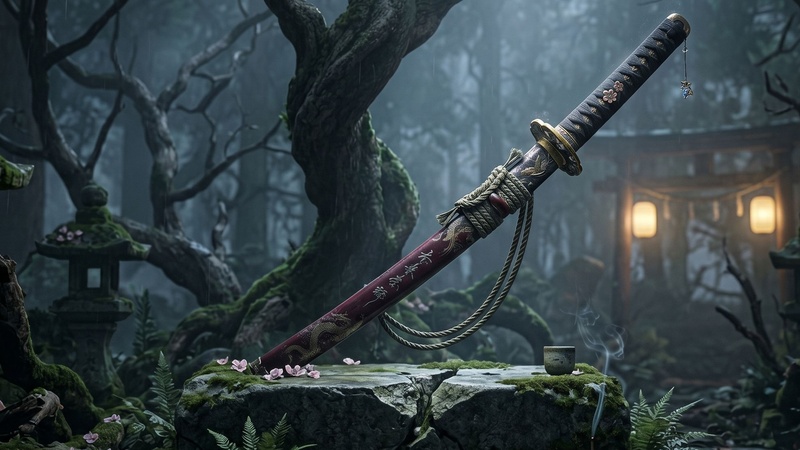
A long, slender blade with a distinct, single-edged curve defines this sword. It is mounted with a hilt designed for a two-handed grip, which is often wrapped in cord over rayskin. A prominent circular or squared metal guard (tsuba) separates the hilt from the blade.

0.80 1200
Piercing 1 (The target's protection is reduced by 1 before the wounds are determined.)
Concealment 3 (Describes how easy the weapon is to conceal)
Damage Potential 3 (Add 3 dice to the hit roll)
Ancatir One and a Half Handed
Blades

Ancatir One and a Half Handed

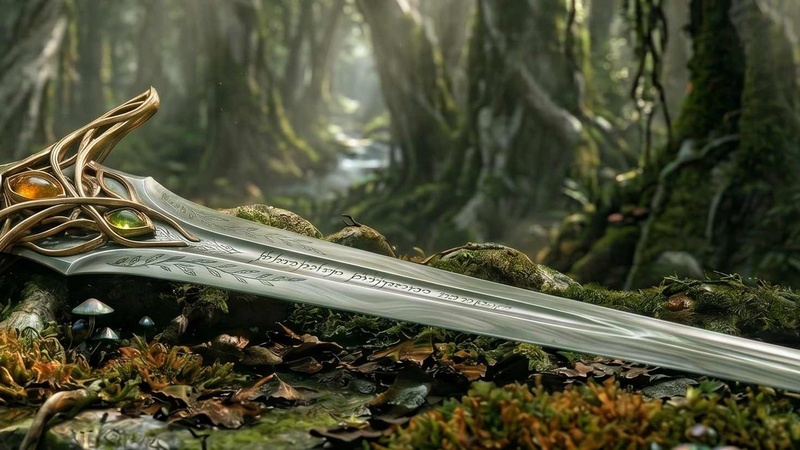
Ancatir one-and-a-half-handed sword. Made of Ancatir steel and characterised by the special hardness of the steel and its lightness.

1.20 1000
Concealment 3 (Describes how easy the weapon is to conceal)
Damage Potential 3 (Add 3 dice to the hit roll)
Katar
Blades

Katar

The katar, known primarily in remote regions, is defined by its unique H-shaped metal grip. The grip consists of two parallel bars protecting the sides of the hand, connected by one or two transverse bars for the fist. A wide, pointed, double-edged blade is fixed to the front of this grip, projecting straight forward from the wielder's knuckles.

0.80 450
Piercing 1 (The target's protection is reduced by 1 before the wounds are determined.)
Concealment 2 (Describes how easy the weapon is to conceal)
Damage Potential 2 (Add 2 dice to the hit roll)
Blade crusher
Blades

Blade crusher

If attacked or parried successfully with this weapon, the opponent's weapon takes 10% damage for each success, in addition to wounds.

1.20 850
Concealment 3 (Describes how easy the weapon is to conceal)
Damage Potential 1 (Add 1 dice to the hit roll)
Al'bah JiRa Rune Dagger
Blades

Al'bah JiRa Rune Dagger

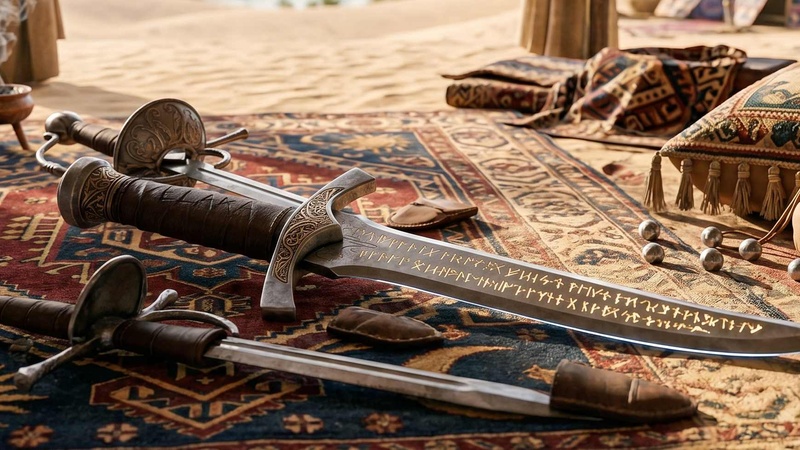
A quite rare weapon that can be found in the oases of Al'Bah JiRa.

The rune-engraved blade of this weapon is slightly curved and sharp like a razor blade.

0.25 6000
Concealment 2 (Describes how easy the weapon is to conceal)
Preparation 0 (The weapon requires 0 actions to ready it)
Damage Potential 2 (Add 2 dice to the hit roll)
Cutlass
Blades

Cutlass

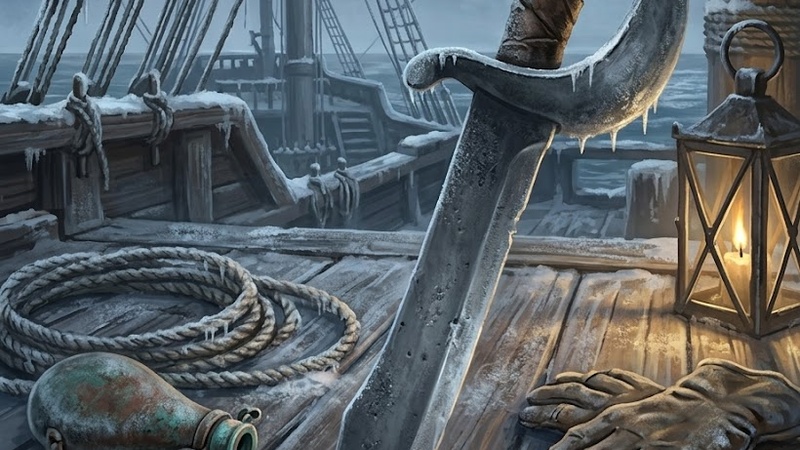
Often called a pirate's weapon, this sword features a short, broad, and slightly curved single-edged blade. The hilt is protected by a solid, often unadorned, basket- or cup-shaped guard that encloses the hand. The steel appears thick and functional, lacking the fine polish of a high-quality sword and suggesting a lower-quality, workhorse construction.

1.20 1000
Concealment 4 (Describes how easy the weapon is to conceal)
Damage Potential 3 (Add 3 dice to the hit roll)
Long Knife
Blades

Long Knife

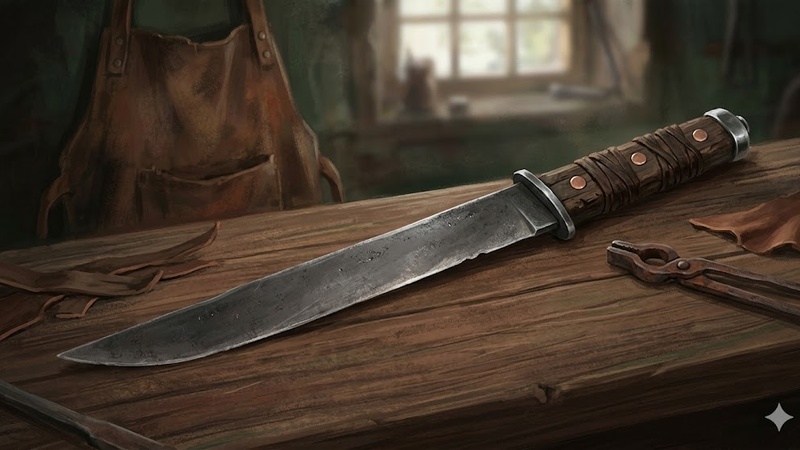
The long knife's blade is long, straight, and single-edged, significantly larger than a standard dagger but lacking the crossguard and balance of a true shortsword. The hilt is simple, often just wood or leather-wrapped, with a minimal or non-existent guard. It is a practical, almost crude, weapon, falling somewhere between a large tool and a dedicated combat blade.

1.20 300
Concealment 4 (Describes how easy the weapon is to conceal)
Damage Potential 2 (Add 2 dice to the hit roll)
Scalpel
Blades

Scalpel

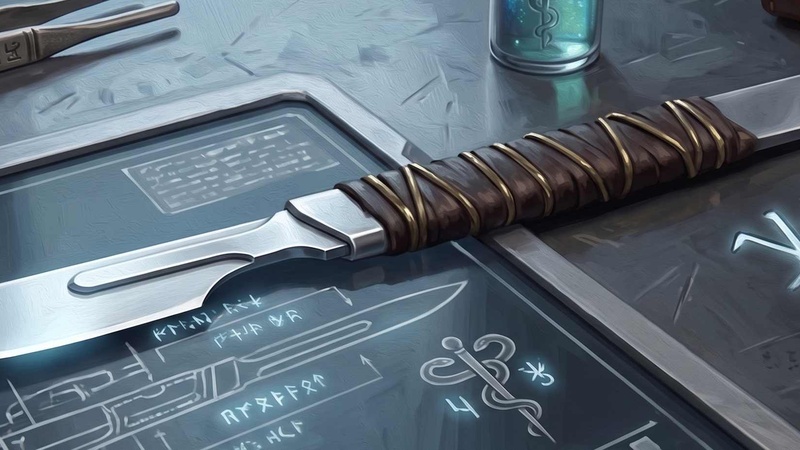
The scalpel consists of a slender metal or bone handle, sized for a delicate, precise grip. It holds a small, fixed blade of exceptional sharpness. The blade itself is thin and often possesses a distinct curve or fine point, appearing far more fragile and keen-edged than a utility knife.

0.50 250
Concealment 1 (Describes how easy the weapon is to conceal)
Preparation 0 (The weapon requires 0 actions to ready it)
Damage Potential 2 (Add 2 dice to the hit roll)
Sabre
Blades

Sabre

A long, curved, single-edged blade defines this one-handed sword. Its most distinct feature is the hilt, which possesses a prominent metal knuckle-bow that sweeps down from the crossguard to the pommel, enclosing and protecting the hand. The blade itself is often moderately wide, distinguishing it from the slender profile of a rapier.

1 950
Concealment 3 (Describes how easy the weapon is to conceal)
Damage Potential 3 (Add 3 dice to the hit roll)
Scimitar
Blades

Scimitar

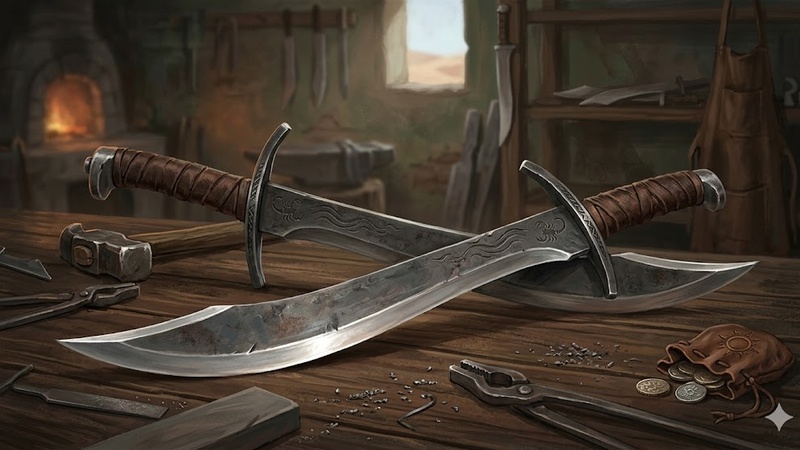
This one-handed sword is defined by its pronounced, sweeping curve, featuring a single sharp edge on its outer side. The blade often broadens slightly as it nears the tip. It is equipped with a simple hilt and a crossguard that is usually straight or curved slightly towards the blade.

1 500
Concealment 5 (Describes how easy the weapon is to conceal)
Damage Potential 3 (Add 3 dice to the hit roll)
Blades

Machete

Do not send a message!

1.20 450
Concealment 4 (Describes how easy the weapon is to conceal)
Damage Potential 3 (Add 3 dice to the hit roll)
Blades

Flame dagger

This dagger's blade is not straight, but forged with a distinct "flame-like," undulating edge. This serrated profile is known to inflict deep, tearing wounds that cause Bleeding. The hilt is typically simple, often dark metal or wrapped leather, putting all focus on the jagged steel.

0.80 450
Concealment 2 (Describes how easy the weapon is to conceal)
Preparation 0 (The weapon requires 0 actions to ready it)
Damage Potential 1 (Add 1 dice to the hit roll)
Bleeding 1 (At the beginning of each round, the wounded character rolls for Endurance. If the roll fails, the character takes one wound for each level of this condition. This condition ends when the character is bandaged (e.g. by first aid).)
Armour Crusher
Blades

Armour Crusher

A heavy dagger suitable for damaging armour. For each hit, the victim loses one protection of their choice in addition to any protection used to avoid wounds.

2 650
Concealment 3 (Describes how easy the weapon is to conceal)
Damage Potential 1 (Add 1 dice to the hit roll)
Armor Breaker 1 (For each hit, the target loses 1 Protection of its choice in addition to any Protection used against the attack.)
Small sword
Blades

Small sword

Often seen as the weapon of a noble, this lightweight sword is defined by its slender, stiff blade, which typically has a triangular cross-section and tapers to an exceptionally fine point. It lacks a true cutting edge, being purely a thrusting weapon. The hilt is its most distinct feature, possessing an intricate guard made of two small shells and a delicate knuckle-bow, designed for precision.

1.20 140
Piercing 1 (The target's protection is reduced by 1 before the wounds are determined.)
Concealment 3 (Describes how easy the weapon is to conceal)
Damage Potential 1 (Add 1 dice to the hit roll)
Hunting knife
Blades

Hunting knife

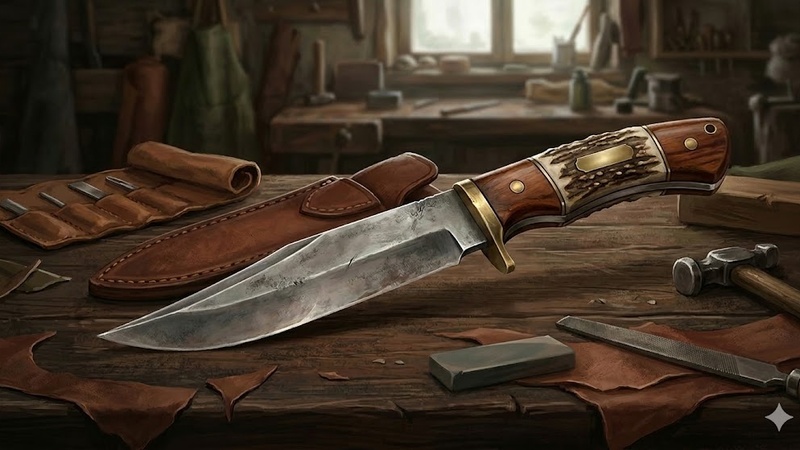
This fixed-blade knife features a strong, single-edged steel blade, often with a slight curve or a "clip-point" tip. The hilt is practical, made of polished wood, bone, or antler, and shaped for a solid, secure grip. It is a sturdy, functional tool, lacking the slender profile or double edge of a combat dagger.

0.30 120
Piercing 1 (The target's protection is reduced by 1 before the wounds are determined.)
Preparation 0 (The weapon requires 0 actions to ready it)
Damage Potential 1 (Add 1 dice to the hit roll)
Flammberge
Blades

Flammberge

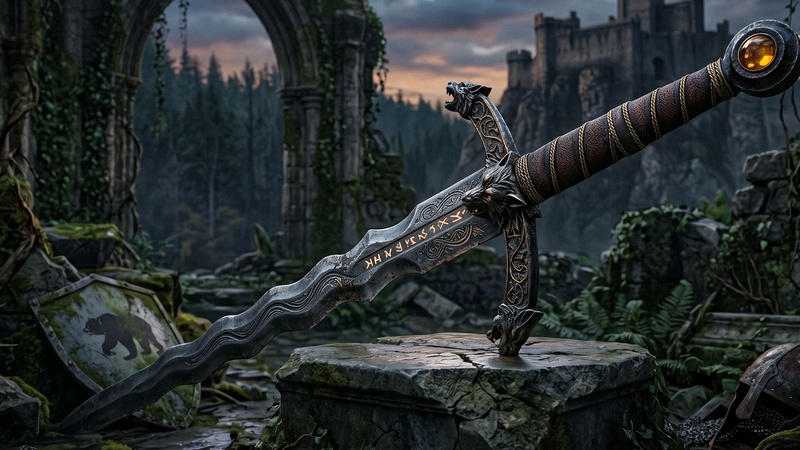
This massive two-handed sword is immediately recognizable by its blade. The long, heavy, double-edged steel is not straight, but forged into a continuous, undulating or "flame-like" wave from the hilt to the point. Its hilt is built for a powerful two-handed grip, often featuring a complex guard with forward-swept quillons or side-rings.

1.40 2200
Range 2 (The weapon can be used at a range of 2 meters)
Concealment 6 (Describes how easy the weapon is to conceal)
Damage Potential 3 (Add 3 dice to the hit roll)
Bleeding 1 (At the beginning of each round, the wounded character rolls for Endurance. If the roll fails, the character takes one wound for each level of this condition. This condition ends when the character is bandaged (e.g. by first aid).)
Ancatir longsword
Blades

Ancatir longsword

This weapon is of Ancatir make, few people have ever seen the forests of the Ancatir with their own eyes, even fewer have entered them, of those who have, only a handful have been allowed to wield an Ancatir weapon,

It is not known how the Ancatir forge their weapons, but it is certain that anyone who sees them is surprised by their superior quality.

1.40 1400
Piercing 1 (The target's protection is reduced by 1 before the wounds are determined.)
Concealment 3 (Describes how easy the weapon is to conceal)
Damage Potential 3 (Add 3 dice to the hit roll)
Wakizashi
Blades

Wakizashi

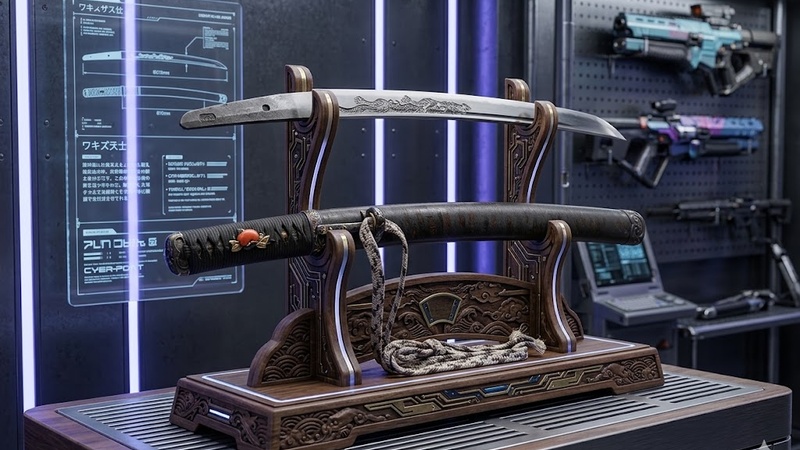
This weapon is a single-edged, curved blade, noticeably shorter than a full longsword or katana, but significantly longer than a standard dagger. It features a hilt long enough for one or two hands, often wrapped in ray skin and cord, and is fitted with a circular or squared metal guard separating the blade from the handle.

0.90 180
Concealment 2 (Describes how easy the weapon is to conceal)
Preparation 0 (The weapon requires 0 actions to ready it)
Damage Potential 2 (Add 2 dice to the hit roll)
Sickle
Blades

Sickle

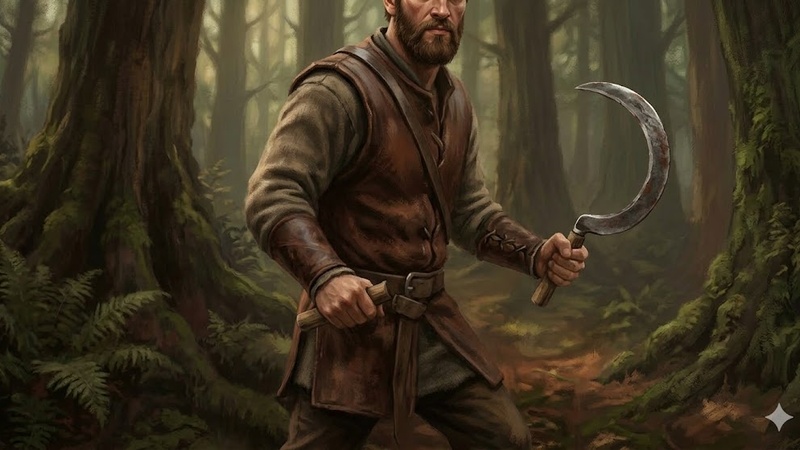
The sickle consists of a short, simple wooden handle designed for a single hand. Attached to it is a metal blade with a pronounced, C-shaped curve, which is sharpened only along its concave inner edge. The overall construction is rudimentary, resembling a common harvesting implement.

0.80 150
Concealment 4 (Describes how easy the weapon is to conceal)
Damage Potential 2 (Add 2 dice to the hit roll)
Rapier
Blades

Rapier

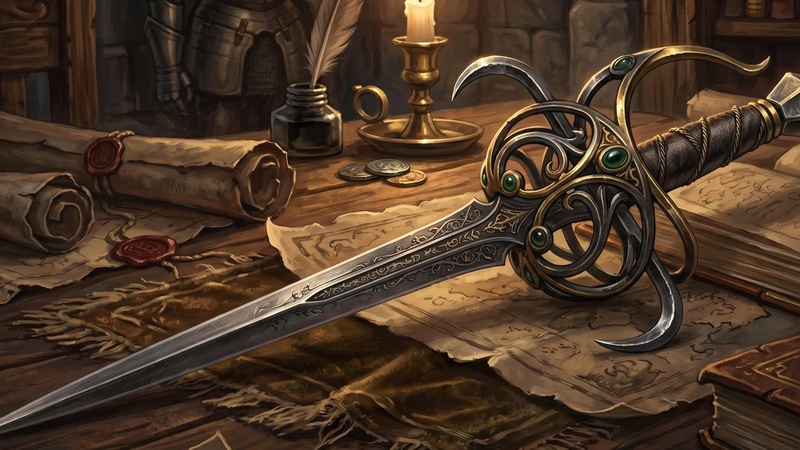
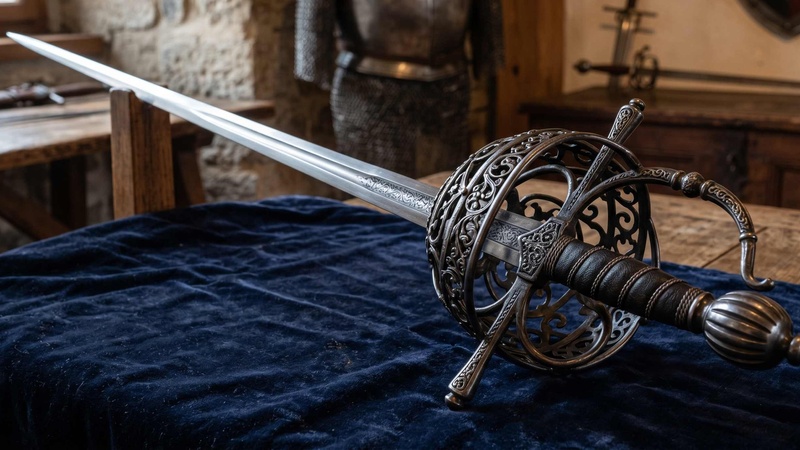
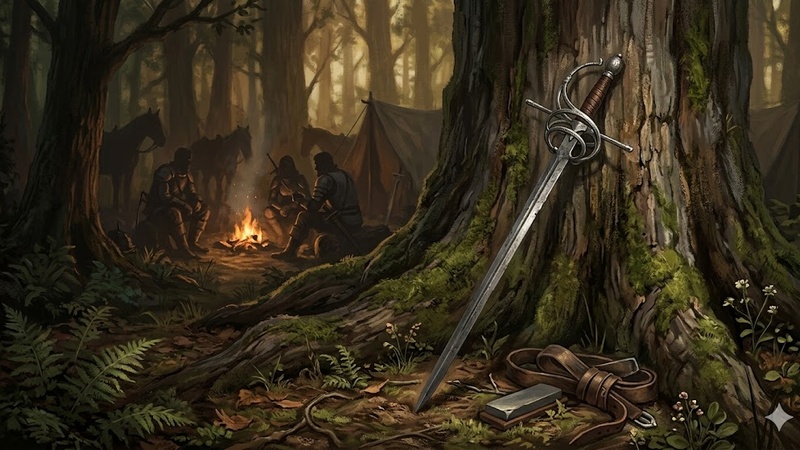
A long, exceptionally slender, and rigid blade, tapering to a needle-sharp point, defines this one-handed sword. Its most recognizable feature is the hilt, which possesses an intricate and complex guard of interlocking metal bars, rings, or a "cup" designed to completely protect the wielder's hand.

1 1200
Concealment 3 (Describes how easy the weapon is to conceal)
Damage Potential 3 (Add 3 dice to the hit roll)
Broadsword
Blades

Broadsword

This sword features a distinctly wide, straight, double-edged blade that tapers only slightly to a functional point. Often seen as a rough weapon, its heavy build and simple, robust crossguard are clearly designed for brute force. The entire weapon is heavy in the hand, lacking the refinement of a rapier or the balance of an arming sword.

3 500
Concealment 5 (Describes how easy the weapon is to conceal)
Damage Potential 4 (Add 4 dice to the hit roll)
Blades

Left Hand

The left hand is a defensive weapon. Wielded in the left hand, it provides one additional action per combat round that can only be used for defence.

0.60 580
Concealment 2 (Describes how easy the weapon is to conceal)
Preparation 0 (The weapon requires 0 actions to ready it)
Damage Potential 1 (Add 1 dice to the hit roll)
Barbarian sword
Blades

Barbarian sword

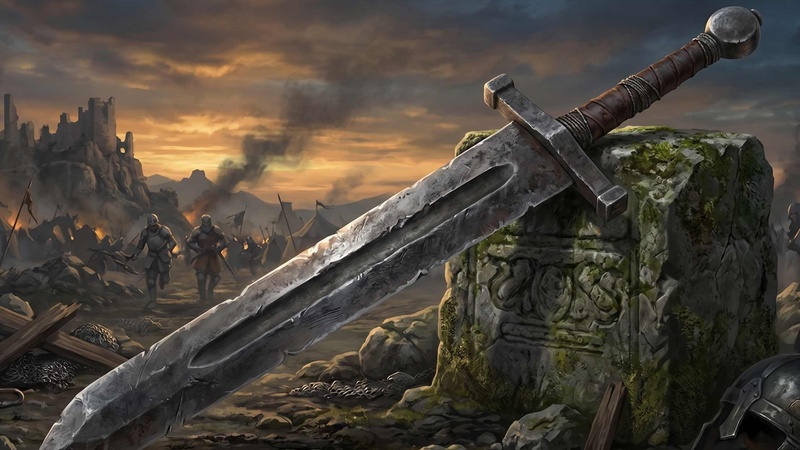
This massive sword is defined by its sheer weight and crude, functional construction. The blade is an oversized, heavy slab of dark metal, often bearing nicks and an uneven edge, far wider than a standard arming sword. The hilt is thick, wrapped in rough leather, and protected by a simple, heavy block of iron serving as a crossguard.

5 2500
Range 2 (The weapon can be used at a range of 2 meters)
Concealment 7 (Describes how easy the weapon is to conceal)
Damage Potential 4 (Add 4 dice to the hit roll)
Knife-studded staff
Blades

Knife-studded staff

The knife-studded staff consists of a shaft approximately one and a half steps long, with a blade attached to each end. The weapon is usually wielded with both hands.

1.10 950
Range 2 (The weapon can be used at a range of 2 meters)
Concealment 7 (Describes how easy the weapon is to conceal)
Damage Potential 2 (Add 2 dice to the hit roll)
Long Sword
Blades

Long Sword

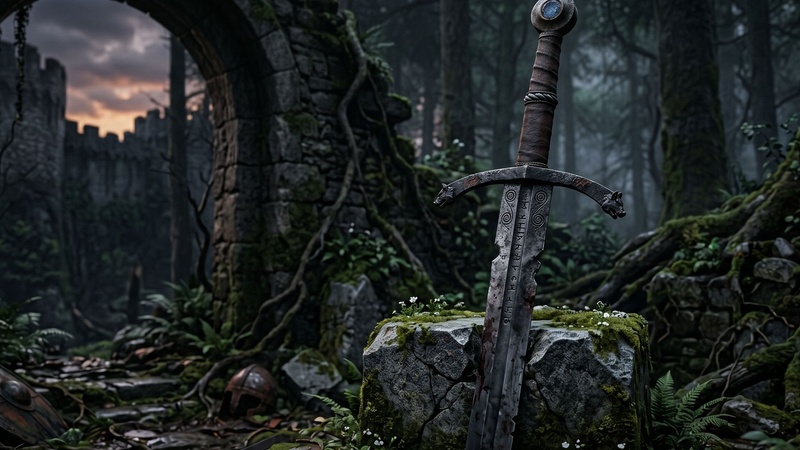
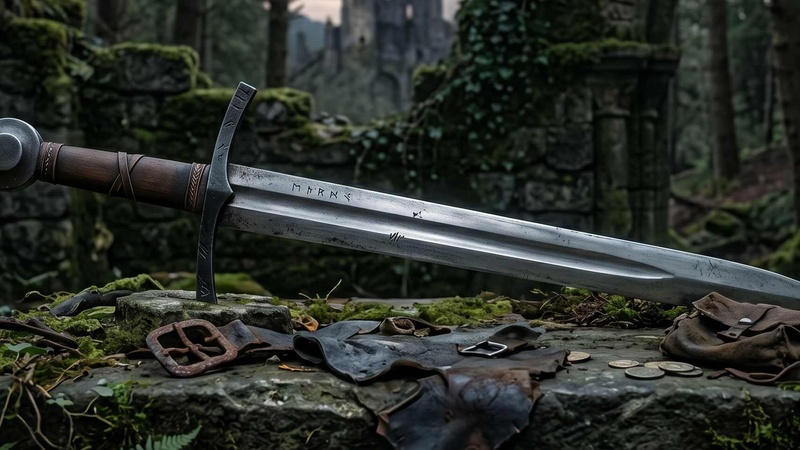
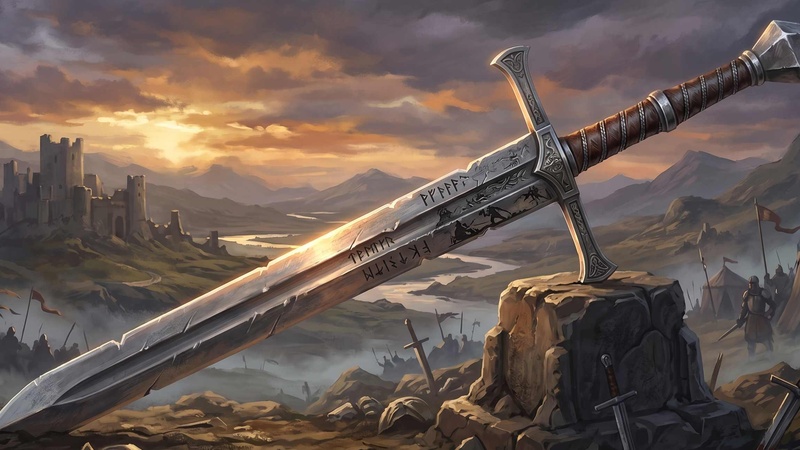
A straight, double-edged blade that tapers to a sharp, functional point is the core of this weapon. It is fitted with a simple, straight metal crossguard and a hilt sized for a single hand, which is balanced by a heavy metal pommel. This is the classic cruciform sword, longer than a dagger but shorter than a true two-handed weapon.

1.40 2000
Range 2 (The weapon can be used at a range of 2 meters)
Concealment 5 (Describes how easy the weapon is to conceal)
Damage Potential 2 (Add 2 dice to the hit roll)
Stiletto
Blades

Stiletto

A parrying dagger, when wielded, gives the wielder one extra action per combat round, which may only be used for defence.

0.80 750
Concealment 2 (Describes how easy the weapon is to conceal)
Preparation 0 (The weapon requires 0 actions to ready it)
Damage Potential 1 (Add 1 dice to the hit roll)
Dagger
Blades

Dagger

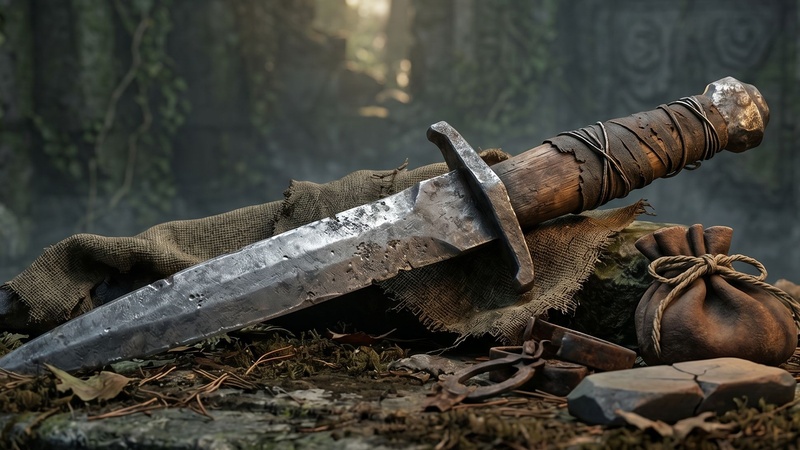
A simple dagger, forged from iron. This item is used both as a tool and as a weapon.

0.60 300
Concealment 1 (Describes how easy the weapon is to conceal)
Preparation 0 (The weapon requires 0 actions to ready it)
Damage Potential 1 (Add 1 dice to the hit roll)
Pata
Blades

Pata

This weapon combines a rigid steel gauntlet, designed to protect the hand and forearm, with a long, straight, double-edged blade. The blade projects directly from the end of the gauntlet, aligned with the wielder's arm. The grip is a horizontal bar held inside the enclosed gauntlet, completely concealing the hand.

1 850
Piercing 1 (The target's protection is reduced by 1 before the wounds are determined.)
Concealment 3 (Describes how easy the weapon is to conceal)
Damage Potential 3 (Add 3 dice to the hit roll)
Axes

Hatchet

A short, one-handed wooden haft is fitted with a simple, wedge-shaped steel head. This head features a single, flared cutting bit, balanced by a flat, unadorned poll on the reverse side. It is a compact, utilitarian tool, lacking the spike or beard of a dedicated battle axe.

0.30 80
Preparation 0 (The weapon requires 0 actions to ready it)
Damage Potential 2 (Add 2 dice to the hit roll)
Axes

Battle Axe

A heavy, forged steel head, balanced for combat, tops this weapon. One side features a wide, flared cutting edge (a "beard"). The side opposite the blade is drawn out into a sharp spike, clearly distinguishing it from a simple utility axe.

5 2000
Piercing 1 (The target's protection is reduced by 1 before the wounds are determined.)
Range 2 (The weapon can be used at a range of 2 meters)
Concealment 8 (Describes how easy the weapon is to conceal)
Damage Potential 4 (Add 4 dice to the hit roll)
Axes

Axe

A wedge shaped head of cast iron or steel is mounted on a sturdy, one-handed wooden haft. The head features a single, flared cutting edge on one side and a flat, heavy poll on the other. It's a basic, versatile design, lacking the length of a long axe or the specific balance of a throwing axe.

2 250
Concealment 4 (Describes how easy the weapon is to conceal)
Damage Potential 3 (Add 3 dice to the hit roll)
Axes

Lumberjack axe

A long, straight haft of smooth, unadorned hardwood provides a two-handed grip. It supports a heavy, wedge-shaped steel head. This head features one wide, extremely sharp cutting bit, balanced by a thick, flat poll on the opposite side.

2.20 350
Piercing 1 (The target's protection is reduced by 1 before the wounds are determined.)
Concealment 5 (Describes how easy the weapon is to conceal)
Damage Potential 3 (Add 3 dice to the hit roll)
Axes

Long Axe

The long axe features a long, sturdy wooden haft, built for a two-handed grip and often reinforced with metal bands. It is mounted with a single, heavy axe-head, which typically has a wide, sweeping cutting edge. Unlike a halberd, the design lacks a spear tip or rear spike, focusing purely on the power of the main blade.

2.50 500
Range 2 (The weapon can be used at a range of 2 meters)
Concealment 5 (Describes how easy the weapon is to conceal)
Damage Potential 3 (Add 3 dice to the hit roll)
Axes

Orc Splitter

A long war axe that provides the reach to cleave an orc from some distance.

4 2900
Piercing 2 (The target's protection is reduced by 2 before the wounds are determined.)
Range 2 (The weapon can be used at a range of 2 meters)
Concealment 7 (Describes how easy the weapon is to conceal)
Damage Potential 3 (Add 3 dice to the hit roll)
Axes

Tss'Krokk

A lizard war axe. The only way to obtain this axe is to take it from the dead hands of a lizard.

6 8500
Piercing 2 (The target's protection is reduced by 2 before the wounds are determined.)
Range 2 (The weapon can be used at a range of 2 meters)
Concealment 8 (Describes how easy the weapon is to conceal)
Preparation 2 (The weapon requires 2 actions to ready it)
Damage Potential 4 (Add 4 dice to the hit roll)
Axes

Francisca

The Francisca (also Franzisca) is a special form of throwing axe, especially common in Yadosia in the first and early second centuries.

0.60 60
Piercing 1 (The target's protection is reduced by 1 before the wounds are determined.)
Preparation 0 (The weapon requires 0 actions to ready it)
Capacity 1 (The weapon can fire 1 times before it needs to be reloaded.)
Damage Potential 2 (Add 2 dice to the hit roll)
Axes

Tomahawk

The tomahawk consists of a straight haft, usually made of wood, which functions as a handle. Affixed to the top of the haft is a head, typically metal, featuring a single sharp blade aligned vertically with the handle.

1.20 40
Piercing 1 (The target's protection is reduced by 1 before the wounds are determined.)
Range 15 (The weapon can be used at a range of 15 meters)
Concealment 2 (Describes how easy the weapon is to conceal)
Preparation 0 (The weapon requires 0 actions to ready it)
Capacity 1 (The weapon can fire 1 times before it needs to be reloaded.)
Damage Potential 3 (Add 3 dice to the hit roll)
Blunt Weapons

Maul

An enormous, cylindrical head, often made of dense hardwood bound with thick iron rings, sits atop a thick, two-handed wooden haft. Unlike a sledgehammer's flat metal faces or a warhammer's spike, this weapon is pure, brutal, blunt mass. The entire object is heavy and top-heavy, clearly designed for shattering impacts.

3 800
Concealment 5 (Describes how easy the weapon is to conceal)
Damage Potential 4 (Add 4 dice to the hit roll)
Blunt Weapons

Gorash's Argorin Blessed Metal Jug

Gorash, son of Marbor carries this unique beer mug made entirely of metal with a tinned interior, lined on the outside with wide rivet-adorned bands.

4.50 8500
Concealment 3 (Describes how easy the weapon is to conceal)
Damage Potential 4 (Add 4 dice to the hit roll)
Blunt Weapons

Mace

This weapon features a solid haft of wood or metal, designed for a one-handed grip. The head consists of a heavy, solid metallic weight which is often cast with projecting flanges, knobs, or pyramid-shaped points. Unlike a hammer, this weapon lacks a flat striking surface, concentrating all its mass into these protrusions.

2.80 1200
Concealment 5 (Describes how easy the weapon is to conceal)
Damage Potential 3 (Add 3 dice to the hit roll)
Blunt Weapons

Battle flail

A sturdy wooden haft, sized for a single hand, is linked by several rings of heavy chain to a free-swinging metal head. This head is a solid iron sphere bristling with numerous fixed, sharp spikes. This flexible connection distinguishes it immediately from the rigid, fixed head of a mace or morning star.

3 580
Piercing 2 (The target's protection is reduced by 2 before the wounds are determined.)
Range 2 (The weapon can be used at a range of 2 meters)
Concealment 6 (Describes how easy the weapon is to conceal)
Damage Potential 3 (Add 3 dice to the hit roll)
Blunt Weapons

Bec de corbin

This long polearm is mounted with a complex steel head. One side features a heavy, blunt hammer face, while the opposite side is forged into a long, sharp spike, often curved downward like a raven's beak. This entire assembly, which is sometimes decoratively shaped like an actual raven's head, sits atop a long wooden haft.

4 1800
Range 2 (The weapon can be used at a range of 2 meters)
Concealment 6 (Describes how easy the weapon is to conceal)
Damage Potential 3 (Add 3 dice to the hit roll)
Blunt Weapons

Flail

The flail consists of two lengths of wood - a long staff serving as a handle and a shorter, free-swinging striking piece. The two parts are joined at one end by a loose hinge of leather or a short chain. It is clearly a repurposed harvesting tool, lacking the metal spikes or balanced weights found on a military-grade battle flail.

2.50 120
Range 2 (The weapon can be used at a range of 2 meters)
Concealment 5 (Describes how easy the weapon is to conceal)
Damage Potential 1 (Add 1 dice to the hit roll)
Blunt Weapons

Tss'Glonx

An lizard warhammer. The only way to obtain this hammer is to take it from the dead hands of a lizard.

6 8500
Piercing 1 (The target's protection is reduced by 1 before the wounds are determined.)
Range 2 (The weapon can be used at a range of 2 meters)
Concealment 9 (Describes how easy the weapon is to conceal)
Preparation 2 (The weapon requires 2 actions to ready it)
Damage Potential 4 (Add 4 dice to the hit roll)
Blunt Weapons

Morning Star

This weapon features a sturdy haft of wood or metal, balanced for one hand, and topped with a solid, heavy head. This head, often spherical, is covered in numerous sharp, fixed spikes, differentiating it from the blunt flanges of a mace. The design is clearly intended to combine blunt-force impact with armor-piercing points.

3 1600
Piercing 1 (The target's protection is reduced by 1 before the wounds are determined.)
Concealment 5 (Describes how easy the weapon is to conceal)
Damage Potential 3 (Add 3 dice to the hit roll)
Blunt Weapons

Club

The club is a single, solid piece of hewn hardwood, defined by its crude, top-heavy balance. It swells from a rough grip, sized for one hand, into a thick, weighted striking end. It lacks any metal components, spikes, or flanges, appearing far simpler and more primitive than a mace.

1.20 15
Concealment 4 (Describes how easy the weapon is to conceal)
Damage Potential 1 (Add 1 dice to the hit roll)
Blunt Weapons

Baton

This weapon is a solid, straight cylinder of polished hardwood, dense polymer, or black steel, sized for a one-handed grip. One end is often textured or wrapped for a secure hold, sometimes featuring a leather wrist thong. The entire object is uniform in thickness, lacking the weighted head of a mace or club.

0.80 800
Concealment 3 (Describes how easy the weapon is to conceal)
Damage Potential 1 (Add 1 dice to the hit roll)
Blunt Weapons

Forging hammer

A short, thick haft of dense hardwood supports a heavy, asymmetrical block of forged steel. One face of this head is a wide, flat square, heavily marked by impact and soot. The opposite side is tapered into a blunt wedge or a rounded "peen," clearly distinct from the sharp spikes of a warhammer or the twin faces of a sledgehammer.

4 850
Concealment 4 (Describes how easy the weapon is to conceal)
Damage Potential 3 (Add 3 dice to the hit roll)
Blunt Weapons

Metal studded club

A thick, heavy length of roughly hewn wood serves as the weapon's core. Its striking end is densely packed with iron studs, blunt rivets, or sharpened nail heads driven deep into the grain. The weapon is top-heavy and crudely made, lacking the balance or metal flanges of a military mace.

1.50 120
Concealment 5 (Describes how easy the weapon is to conceal)
Damage Potential 2 (Add 2 dice to the hit roll)
Blunt Weapons

Pickaxe

The pickaxe is actually intended as a hand tool and consists of a long, sturdy wooden shaft designed for a two-handed grip. A heavy, forged metal head is mounted crosswise at the top. This has a long, sharp spike on one side and a narrow, horizontal chisel blade on the opposite side. Together with the handle, this forms a T-shape.

2 180
Piercing 1 (The target's protection is reduced by 1 before the wounds are determined.)
Concealment 5 (Describes how easy the weapon is to conceal)
Damage Potential 2 (Add 2 dice to the hit roll)
Blunt Weapons

Sledgehammer

The sledgehammer consists of an exceptionally long, thick wooden haft, demanding a two-handed grip. It is mounted with an enormous, heavy head made of a solid block of forged iron or steel. The head features two wide, flat striking surfaces, clearly prioritizing sheer weight and impact over the spikes or flanges of a warhammer.

4 850
Piercing 1 (The target's protection is reduced by 1 before the wounds are determined.)
Range 2 (The weapon can be used at a range of 2 meters)
Concealment 6 (Describes how easy the weapon is to conceal)
Damage Potential 2 (Add 2 dice to the hit roll)
Blunt Weapons

Nunchaku

This weapon consists of two short, solid batons, typically hardwood, connected at their ends by a short length of metal chain or rope. The weapon's flexible, difficult-to-control nature is well-known; if an attack roll is unsuccessful, the wielder of the weapon receives one wound.

1.20 650
Concealment 2 (Describes how easy the weapon is to conceal)
Preparation 0 (The weapon requires 0 actions to ready it)
Damage Potential 3 (Add 3 dice to the hit roll)
Blunt Weapons

Battle Scythe

The battle scythe consists of a long, reinforced wooden haft, similar to a polearm. A single, large blade, clearly identifiable as a re-forged agricultural scythe blade, is socketed at the top, re-oriented to project straight forward along the line of the haft. The blade itself is long and possesses a deep, concave curve, with its sharpened edge on the inside.

3 1300
Piercing 1 (The target's protection is reduced by 1 before the wounds are determined.)
Range 2 (The weapon can be used at a range of 2 meters)
Concealment 7 (Describes how easy the weapon is to conceal)
Damage Potential 3 (Add 3 dice to the hit roll)
Blunt Weapons

Bullwhip

The whip is a single, continuous piece of dark, plaited leather, often several meters long. It begins with a short, rigid, braided handle that transitions seamlessly into a long, flexible thong. This thong tapers consistently from the thick handle down to a very fine, thin cord at the tip.

1 20
Range 3 (The weapon can be used at a range of 3 meters)
Concealment 1 (Describes how easy the weapon is to conceal)
Capacity 1 (The weapon can fire 1 times before it needs to be reloaded.)
Damage Potential 1 (Add 1 dice to the hit roll)
Blunt Weapons

Warhammer

A heavy, forged metal head defines this weapon, clearly separating it from a mace. One side of this head features a flat or slightly convex blunt striking face, while the opposite side is drawn out into a thick, sharp spike or a slightly curved, armor-piercing fluke. This head is mounted on a sturdy wooden or steel-reinforced haft, often sized for a two-handed grip.

5 1500
Range 2 (The weapon can be used at a range of 2 meters)
Concealment 6 (Describes how easy the weapon is to conceal)
Preparation 2 (The weapon requires 2 actions to ready it)
Damage Potential 2 (Add 2 dice to the hit roll)
Blunt Weapons

Nine-tails

A short, solid handle, often wrapped in dark leather, serves as the grip for this whip. Nine separate thongs or cords of equal length are attached to this handle, each one tipped with a hard, knotted end or a small metal barb. The weapon is unwieldy; if the hit roll is unsuccessful, the nine-tails wounds the wearer with one wound.

1.50 850
Range 2 (The weapon can be used at a range of 2 meters)
Concealment 5 (Describes how easy the weapon is to conceal)
Damage Potential 3 (Add 3 dice to the hit roll)
Polearms

Lance

A long, thick shaft of dense wood forms the core of this heavy polearm. It is topped with a sharp, conical or leaf-shaped steel head designed purely for piercing. A circular steel handguard (vamplate) is often fixed to the shaft just above the grip, distinguishing it from a simpler pike or spear.

3 1000
Piercing 2 (The target's protection is reduced by 2 before the wounds are determined.)
Range 2 (The weapon can be used at a range of 2 meters)
Concealment 8 (Describes how easy the weapon is to conceal)
Damage Potential 2 (Add 2 dice to the hit roll)
Polearms

Toranian Boar Spear

This weapon is built around an exceptionally thick and heavy shaft of dark, reinforced wood, much sturdier than a standard military spear. Its head is a massive, broad leaf-shaped blade, but its most defining feature is a strong, fixed iron cross-guard or "toggle" positioned just below the socket. The metalwork is heavy and practical, bearing a simple forge mark shaped like a tusk.

1.50 650
Piercing 1 (The target's protection is reduced by 1 before the wounds are determined.)
Range 2 (The weapon can be used at a range of 2 meters)
Concealment 6 (Describes how easy the weapon is to conceal)
Damage Potential 2 (Add 2 dice to the hit roll)
Polearms

Glaive

A long, single-edged blade, resembling a large knife or short sword, is mounted vertically on the end of a long wooden haft. This blade is affixed in line with the shaft, creating a polearm that lacks the complex spear-points or side-flukes of a partisan or corseque. The weapon is balanced for long, sweeping slashes.

2.80 2750
Piercing 1 (The target's protection is reduced by 1 before the wounds are determined.)
Range 2 (The weapon can be used at a range of 2 meters)
Concealment 6 (Describes how easy the weapon is to conceal)
Damage Potential 3 (Add 3 dice to the hit roll)
Polearms

Staff

A long, solid piece of hardwood, often gnarled or polished smooth. It is roughly the height of a person and may be topped with a carved knob, a simple crystal, or left unadorned.

0.80 100
Range 2 (The weapon can be used at a range of 2 meters)
Concealment 5 (Describes how easy the weapon is to conceal)
Preparation 0 (The weapon requires 0 actions to ready it)
Damage Potential 1 (Add 1 dice to the hit roll)
Polearms

Scythe

A long, curved wooden shaft is fitted with two perpendicular hand-grips. Mounted at the base of this shaft is a single, very long, curved blade that juts out at a right angle, with its sharp edge along the concave side. The entire assembly is unwieldy, clearly designed for wide, sweeping motions.

2.50 580
Range 2 (The weapon can be used at a range of 2 meters)
Concealment 7 (Describes how easy the weapon is to conceal)
Damage Potential 3 (Add 3 dice to the hit roll)
Polearms

Battle staff

Perfect balance defines this weapon, which is a long, smooth shaft of dense hardwood, often capped with blued metal at both ends. Known as the weapon of a monk, its lightweight yet sturdy construction is designed for very quick attacks.

0.60 150
Range 2 (The weapon can be used at a range of 2 meters)
Concealment 6 (Describes how easy the weapon is to conceal)
Damage Potential 2 (Add 2 dice to the hit roll)
Polearms

Corseque

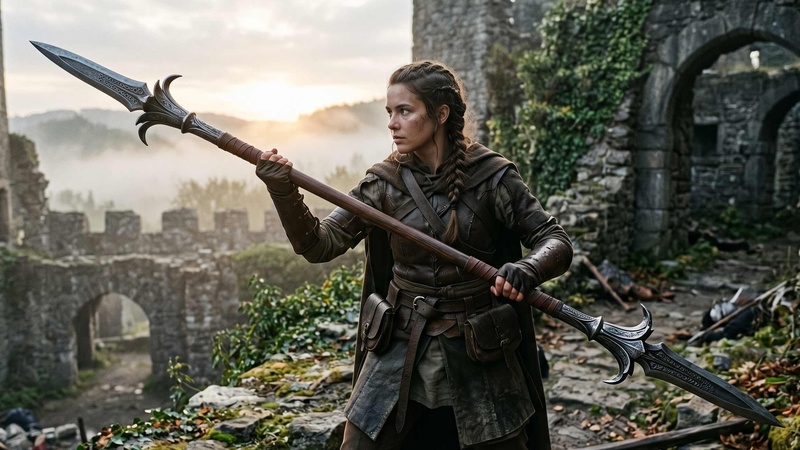
The head of the corseque consists of a long, primary spear spike. Projecting from the base of this spike are two shorter, sharp tines or flukes, which are angled forward or slightly outward. This entire three-pointed metal assembly is mounted on a long wooden haft.

2.50 2450
Range 2 (The weapon can be used at a range of 2 meters)
Concealment 5 (Describes how easy the weapon is to conceal)
Damage Potential 3 (Add 3 dice to the hit roll)
Polearms

Tournament lance

This is an exceptionally long, thick polearm shaft, crafted from wood that is often painted with bright, heraldic colors. A conical steel handguard (vamplate) is fixed above the grip, and unlike a war lance, the tip features no sharpened point. Instead, it is capped with a blunted metal head or a coronel, a small, crown-shaped fixture.

2.50 1400
Range 3 (The weapon can be used at a range of 3 meters)
Concealment 7 (Describes how easy the weapon is to conceal)
Preparation 2 (The weapon requires 2 actions to ready it)
Damage Potential 3 (Add 3 dice to the hit roll)
Polearms

Trident

A three-pronged metal head defines this polearm. It features a long central spear-point, flanked on both sides by two shorter, equally sharp tines, which are sometimes barbed. This entire assembly is mounted on a long, sturdy wooden haft.

3 850
Piercing 1 (The target's protection is reduced by 1 before the wounds are determined.)
Range 2 (The weapon can be used at a range of 2 meters)
Concealment 5 (Describes how easy the weapon is to conceal)
Damage Potential 3 (Add 3 dice to the hit roll)
Polearms

Pike

An exceptionally long and rigid wooden shaft, significantly taller than a person, dominates this polearm's design. It is tipped with a very small, sharp steel spike, purely functional and lacking the broad blade of a spear. The entire weapon is unwieldy up close, built exclusively for maintaining distance.

3 1800
Piercing 2 (The target's protection is reduced by 2 before the wounds are determined.)
Range 2 (The weapon can be used at a range of 2 meters)
Concealment 6 (Describes how easy the weapon is to conceal)
Damage Potential 3 (Add 3 dice to the hit roll)
Polearms

Angrasch's forge

A dwarven fighting staff with the golden branding "Angrasch's forge". A magical dwarven rune is embedded in the tip.

0.70 8000
Piercing 2 (The target's protection is reduced by 2 before the wounds are determined.)
Range 2 (The weapon can be used at a range of 2 meters)
Concealment 5 (Describes how easy the weapon is to conceal)
Damage Potential 2 (Add 2 dice to the hit roll)
Polearms

Dignity wand

An insignia of a priest, not actually intended for combat.

1.50 950
Range 2 (The weapon can be used at a range of 2 meters)
Concealment 7 (Describes how easy the weapon is to conceal)
Preparation 0 (The weapon requires 0 actions to ready it)
Polearms

Pitchfork

A long, simple wooden haft is topped with a metal head. This head splits into two, three, or sometimes four long, thin metal tines, which are sharpened to a point and curve slightly forward. The entire construction is that of a basic agricultural tool, lacking the reinforcement or balance of a military trident.

2 5
Piercing 1 (The target's protection is reduced by 1 before the wounds are determined.)
Range 2 (The weapon can be used at a range of 2 meters)
Concealment 1 (Describes how easy the weapon is to conceal)
Reload actions 0 (Reloading the weapon takes 0 actions)
Damage Potential 2 (Add 2 dice to the hit roll)
Polearms

Spear

A long, straight shaft of polished hardwood forms the main body of this polearm. It is tipped with a single, sharp metal head, often forged into a simple leaf-shape or a sharpened spike. The weapon is balanced for reach, lacking the complex flukes of a partisan or the axe-head of a halberd.

1.20 600
Piercing 1 (The target's protection is reduced by 1 before the wounds are determined.)
Range 2 (The weapon can be used at a range of 2 meters)
Concealment 6 (Describes how easy the weapon is to conceal)
Damage Potential 1 (Add 1 dice to the hit roll)
Polearms

Halberd

A complex, multi-purpose head of forged steel tops this long polearm. It combines three distinct elements: a forward-facing spear point, a broad, heavy axe-blade on one side, and a sharp spike or hook on the reverse side. This entire assembly is mounted on a long, sturdy wooden haft, often reinforced with metal langets.

3 3000
Piercing 2 (The target's protection is reduced by 2 before the wounds are determined.)
Range 2 (The weapon can be used at a range of 2 meters)
Concealment 8 (Describes how easy the weapon is to conceal)
Damage Potential 3 (Add 3 dice to the hit roll)
Polearms

Hadbard's staff

The magical fighting staff of the magnificently dilletant illusionist Hadbard Fuzknod. If four equal numbers are rolled on the hit roll, the staff casts a random spell of wizardry.

1.50 6800
Range 2 (The weapon can be used at a range of 2 meters)
Concealment 5 (Describes how easy the weapon is to conceal)
Damage Potential 3 (Add 3 dice to the hit roll)
Polearms

Battle lance

A long, thick shaft of dense, reinforced wood forms the core of this heavy polearm. It is topped with a sharp, leaf-shaped or conical steel head designed for piercing, lacking the blunted coronel of its tournament counterpart. A circular steel handguard (vamplate) is often fixed to the shaft just above the intended grip area.

3.50 1500
Piercing 2 (The target's protection is reduced by 2 before the wounds are determined.)
Range 3 (The weapon can be used at a range of 3 meters)
Concealment 7 (Describes how easy the weapon is to conceal)
Damage Potential 3 (Add 3 dice to the hit roll)
Polearms

Partisan

A long, sturdy wooden haft is capped with a broad, double-edged spearhead. Flanking the base of this main blade are two smaller, symmetrical, and sharpened projections, often shaped like crescent moons or pointed flukes. The overall head is typically flat and more ornate than a military spear, but lacks the axe-blade of a halberd.

3 1000
Piercing 1 (The target's protection is reduced by 1 before the wounds are determined.)
Range 2 (The weapon can be used at a range of 2 meters)
Concealment 6 (Describes how easy the weapon is to conceal)
Damage Potential 3 (Add 3 dice to the hit roll)
Bows

Short bow

A single stave of cured wood, often ash or elm, forms this compact bow. Its limbs are noticeably short and slender, lacking the impressive height of a Long Bow or the heavy reinforcement of a Battle Bow. The weapon is lightweight and fitted with a simple twisted fiber string.

1.20 400
Range 40 (The weapon can be used at a range of 40 meters)
Concealment 3 (Describes how easy the weapon is to conceal)
Capacity 1 (The weapon can fire 1 times before it needs to be reloaded.)
Damage Potential 2 (Add 2 dice to the hit roll)
Bows

Long Bow

This bow is defined by its impressive height, often matching or exceeding that of its wielder. It consists of a single, long stave of cured wood, typically yew or ash, polished smooth. Unlike the multi-layered Composite Bow, its power comes purely from the length of its simple, slightly curved limbs and the tension of its heavy-gauge string.

2 600
Piercing 1 (The target's protection is reduced by 1 before the wounds are determined.)
Range 60 (The weapon can be used at a range of 60 meters)
Concealment 5 (Describes how easy the weapon is to conceal)
Capacity 1 (The weapon can fire 1 times before it needs to be reloaded.)
Damage Potential 2 (Add 2 dice to the hit roll)
Bows

Crossbow

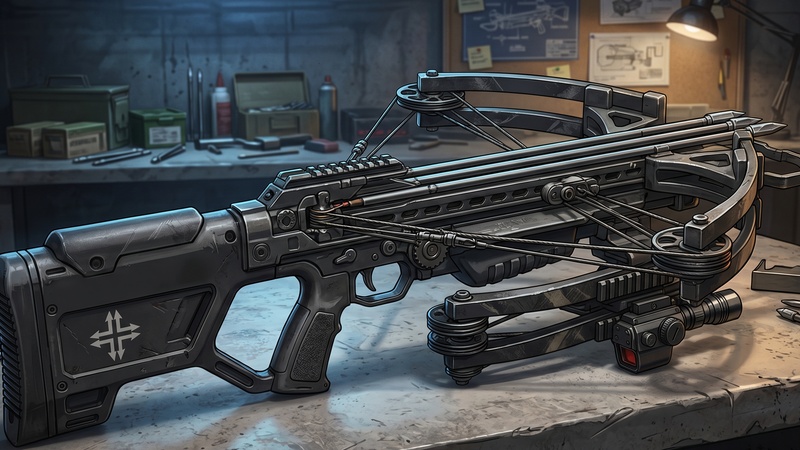
A solid stock of wood or metal forms the main body of this weapon, featuring a groove on its upper surface. Near the front, a single horizontal bow limb is mounted. A trigger mechanism is set into the stock, designed to hold a drawn bowstring under tension.

3 800
Piercing 1 (The target's protection is reduced by 1 before the wounds are determined.)
Range 40 (The weapon can be used at a range of 40 meters)
Concealment 3 (Describes how easy the weapon is to conceal)
Preparation 2 (The weapon requires 2 actions to ready it)
Capacity 1 (The weapon can fire 1 times before it needs to be reloaded.)
Reload actions 2 (Reloading the weapon takes 2 actions)
Damage Potential 3 (Add 3 dice to the hit roll)
Bows

Elven Bow

This longbow is distinguished by its seamless, elegant construction from a single piece of pale, polished wood, making it noticeably lighter than a standard Battle Bow. Delicate, flowing carvings resembling leaves or script are etched directly into the slender limbs. The bowstring is a thin, tightly-spun cord that appears almost silvery.

2 850
Piercing 2 (The target's protection is reduced by 2 before the wounds are determined.)
Range 70 (The weapon can be used at a range of 70 meters)
Concealment 5 (Describes how easy the weapon is to conceal)
Damage Potential 2 (Add 2 dice to the hit roll)
Bows

Hand crossbow

This weapon is a small, concealable crossbow, often built with a pistol-like grip. It features a short, horizontal bow prod and a simple mechanism that makes it easy to span. The entire lightweight construction is designed to be drawn quickly.

0.80 900
Piercing 1 (The target's protection is reduced by 1 before the wounds are determined.)
Range 10 (The weapon can be used at a range of 10 meters)
Concealment 1 (Describes how easy the weapon is to conceal)
Preparation 0 (The weapon requires 0 actions to ready it)
Capacity 1 (The weapon can fire 1 times before it needs to be reloaded.)
Damage Potential 2 (Add 2 dice to the hit roll)
Bows

Hunting Bow

This weapon consists of a long, single stave of cured wood, often yew or ash. It has a simple leather grip and a string of twisted fiber, lacking the heavy reinforcement of a Battle Bow.

1.20 650
Piercing 1 (The target's protection is reduced by 1 before the wounds are determined.)
Range 60 (The weapon can be used at a range of 60 meters)
Capacity 1 (The weapon can fire 1 times before it needs to be reloaded.)
Damage Potential 2 (Add 2 dice to the hit roll)
Bows

Composite bow

This bow is crafted from multiple materials laminated together—typically horn, sinew, and a wooden core—bound tightly with wrappings. When unstrung, its limbs curve noticeably forward at the tips. The entire construction is often more compact than a Battle Bow but features a much more complex and deliberate shape.

1.20 750
Range 50 (The weapon can be used at a range of 50 meters)
Concealment 5 (Describes how easy the weapon is to conceal)
Preparation 0 (The weapon requires 0 actions to ready it)
Capacity 1 (The weapon can fire 1 times before it needs to be reloaded.)
Damage Potential 3 (Add 3 dice to the hit roll)
Bows

Battle Bow

This heavy bow features a thick, reinforced frame, often made of laminated wood or composite material, making it larger and sturdier than a simple hunting bow. Its limbs are stiff and pronounced in their curve, attached to a thick, heavy-gauge bowstring. The entire weapon is built for power, lacking ornamentation in favor of a purely functional design.

1.40 1450
Piercing 1 (The target's protection is reduced by 1 before the wounds are determined.)
Range 70 (The weapon can be used at a range of 70 meters)
Concealment 6 (Describes how easy the weapon is to conceal)
Capacity 1 (The weapon can fire 1 times before it needs to be reloaded.)
Damage Potential 4 (Add 4 dice to the hit roll)
Bows

Light Crossbow

A stock, often of wood or composite material, forms the main body of this weapon. Near the front, a single, relatively short horizontal prod (bow limb) is mounted. This weapon features one bowstring, a simple trigger mechanism, and a groove on the stock's upper surface designed to hold a single bolt.

2.20 650
Piercing 1 (The target's protection is reduced by 1 before the wounds are determined.)
Range 40 (The weapon can be used at a range of 40 meters)
Concealment 3 (Describes how easy the weapon is to conceal)
Capacity 1 (The weapon can fire 1 times before it needs to be reloaded.)
Damage Potential 2 (Add 2 dice to the hit roll)
Bows

Repetier Crossbow

A prominent lever mechanism, often integrated into the stock and connected to a top-mounted box or gravity-fed magazine, defines this crossbow. This complex assembly makes it a weapon that is very easy to span and quick to load. The rest of the construction features a standard prod and trigger, though the stock is heavily modified to accommodate the reloading action.

3 950
Piercing 1 (The target's protection is reduced by 1 before the wounds are determined.)
Range 30 (The weapon can be used at a range of 30 meters)
Concealment 3 (Describes how easy the weapon is to conceal)
Preparation 2 (The weapon requires 2 actions to ready it)
Capacity 2 (The weapon can fire 2 times before it needs to be reloaded.)
Damage Potential 3 (Add 3 dice to the hit roll)
Bows

Taxaro's trail

This is the tail of the Taxaros, a powerful artifact bow that occurs only once. Causes Burning 2.

2.10 6500
Piercing 1 (The target's protection is reduced by 1 before the wounds are determined.)
Range 50 (The weapon can be used at a range of 50 meters)
Concealment 5 (Describes how easy the weapon is to conceal)
Capacity 1 (The weapon can fire 1 times before it needs to be reloaded.)
Damage Potential 4 (Add 4 dice to the hit roll)
Quadruple crossbow
Bows

Quadruple crossbow

This heavy weapon possesses a wide, reinforced stock, built to accommodate four horizontal bow limbs, often arranged in a stacked or side-by-side configuration. The top of the stock features four parallel grooves, each designed to hold a bolt. A complex trigger mechanism is connected to an intricate system of bowstrings that hold all four bolts under tension simultaneously.

6 4100
Piercing 1 (The target's protection is reduced by 1 before the wounds are determined.)
Range 45 (The weapon can be used at a range of 45 meters)
Recoil Compensation 1 (The recoil penalty is reduced by 1)
Concealment 8 (Describes how easy the weapon is to conceal)
Preparation 2 (The weapon requires 2 actions to ready it)
Capacity 4 (The weapon can fire 4 times before it needs to be reloaded.)
Reload actions 4 (Reloading the weapon takes 4 actions)
Damage Potential 3 (Add 3 dice to the hit roll)
Bows

Double Crossbow

A central stock of wood or metal is mounted with two horizontal bow limbs, set either side-by-side or vertically stacked. The weapon features a trigger mechanism connected to two parallel grooves or tracks. These tracks are designed to hold two separate bolts, which are secured under tension by corresponding bowstrings.

3.80 2900
Piercing 1 (The target's protection is reduced by 1 before the wounds are determined.)
Range 45 (The weapon can be used at a range of 45 meters)
Concealment 4 (Describes how easy the weapon is to conceal)
Preparation 2 (The weapon requires 2 actions to ready it)
Capacity 2 (The weapon can fire 2 times before it needs to be reloaded.)
Damage Potential 3 (Add 3 dice to the hit roll)
Slings

Sling

A long, double-stranded cord made of braided fiber or sinew features a wider, cup-shaped leather pouch woven into its center. The two cords extending from this pouch are of equal length, with one end often tied into a simple finger-loop.

0.10 20
Range 15 (The weapon can be used at a range of 15 meters)
Preparation 0 (The weapon requires 0 actions to ready it)
Capacity 1 (The weapon can fire 1 times before it needs to be reloaded.)
Damage Potential 1 (Add 1 dice to the hit roll)
Slings

Pilum with Amentum

A long, thin iron shank, culminating in a sharp, pyramidal tip, defines this javelin. This metal shank is deeply socketed into a shorter, weighted wooden haft. Wrapped securely around the haft, near the weapon's balance point, is a long leather thong (amentum) fashioned into a loop for the fingers.

2 1
Piercing 1 (The target's protection is reduced by 1 before the wounds are determined.)
Range 40 (The weapon can be used at a range of 40 meters)
Capacity 1 (The weapon can fire 1 times before it needs to be reloaded.)
Damage Potential 1 (Add 1 dice to the hit roll)
Slings

Slingshot

A Y-shaped frame, often carved from a single piece of hardwood or formed from bent metal, serves as the handle. Two strong elastic bands are secured to the upper prongs of this frame. The opposite ends of these bands are joined by a small, flexible pouch, typically made of leather.

0.50 30
Range 15 (The weapon can be used at a range of 15 meters)
Concealment 1 (Describes how easy the weapon is to conceal)
Preparation 0 (The weapon requires 0 actions to ready it)
Capacity 1 (The weapon can fire 1 times before it needs to be reloaded.)
Damage Potential 2 (Add 2 dice to the hit roll)
Slings

Blowpipe

This weapon is a simple, long tube of hollowed reed or polished wood. One end is visibly carved and smoothed to serve as a mouthpiece. The entire object is lightweight and perfectly straight, featuring no mechanisms or strings, only the empty channel running its length.

0.80 120
Piercing 1 (The target's protection is reduced by 1 before the wounds are determined.)
Concealment 5 (Describes how easy the weapon is to conceal)
Preparation 0 (The weapon requires 0 actions to ready it)
Capacity 1 (The weapon can fire 1 times before it needs to be reloaded.)
Range 15 (The weapon can be used at a range of 15 meters)
Rifles

O'Grut Blunderbuss

If a hit roll shows 4 of the same dice, the O'Grut blunderbuss inflicts 2 wounds on the wearer.

2 3800
Piercing 1 (The target's protection is reduced by 1 before the wounds are determined.)
Range 45 (The weapon can be used at a range of 45 meters)
Concealment 5 (Describes how easy the weapon is to conceal)
Capacity 1 (The weapon can fire 1 times before it needs to be reloaded.)
Damage Potential 5 (Add 5 dice to the hit roll)
Throwing Weapons

Throwing Spear

A slender haft of flexible, lightweight wood forms the body of this spear. Its head is a small, sharp leaf-blade or a simple spike, lacking the heavy, broad head of a military spear. The weapon is balanced noticeably forward of the grip, clearly intended for flight rather than bracing.

2 300
Piercing 1 (The target's protection is reduced by 1 before the wounds are determined.)
Range 20 (The weapon can be used at a range of 20 meters)
Concealment 6 (Describes how easy the weapon is to conceal)
Capacity 1 (The weapon can fire 1 times before it needs to be reloaded.)
Damage Potential 1 (Add 1 dice to the hit roll)
Throwing Weapons

Throwing Axe

A distinct head-heavy balance, clearly intended for rotation, defines this small axe. It possesses a short, smooth wooden haft designed for a one-handed grip. The metal head is single-bladed and often features a sharpened poll or spike on the reverse side, distinguishing it from a simple hatchet.

1 25
Range 10 (The weapon can be used at a range of 10 meters)
Concealment 3 (Describes how easy the weapon is to conceal)
Capacity 1 (The weapon can fire 1 times before it needs to be reloaded.)
Damage Potential 3 (Add 3 dice to the hit roll)